
Virginia Cannabis Bills Risk Sidelining Small Businesses and Farmers, Warn CSBA and Marijuana Justice Advocates

By Matt Lyden, CSBA Marketing Chair
In a unified call to action, representatives from the Cannabis Small Business Association (CSBA) and Marijuana Justice convened a press conference on February 19, 2026, to spotlight critical flaws in Virginia's pending adult-use cannabis legislation.
The event, streamed live and covered by numerous members of local Virginia press outlets, emphasized how the proposed bills could entrench dominance by large multi-state operators (MSOs) at the expense of independent Virginia farmers, microbusinesses, and equitable market access. Speakers urged lawmakers to prioritize small-scale cultivators, realistic timelines, and a public health-focused regulatory framework over rushed implementations that favor corporate interests.
The press conference, moderated with opening remarks on the House and Senate bills, highlighted the need for a market that supports Virginia's agricultural heritage and promotes justice in cannabis policy.
"This is about building an inclusive industry that lifts up our small businesses and farmers, not handing the keys to out-of-state giants," said a CSBA President Barbara Biddle in her introductory comments.
Unrealistic Timelines Give Medical Operators a Head Start
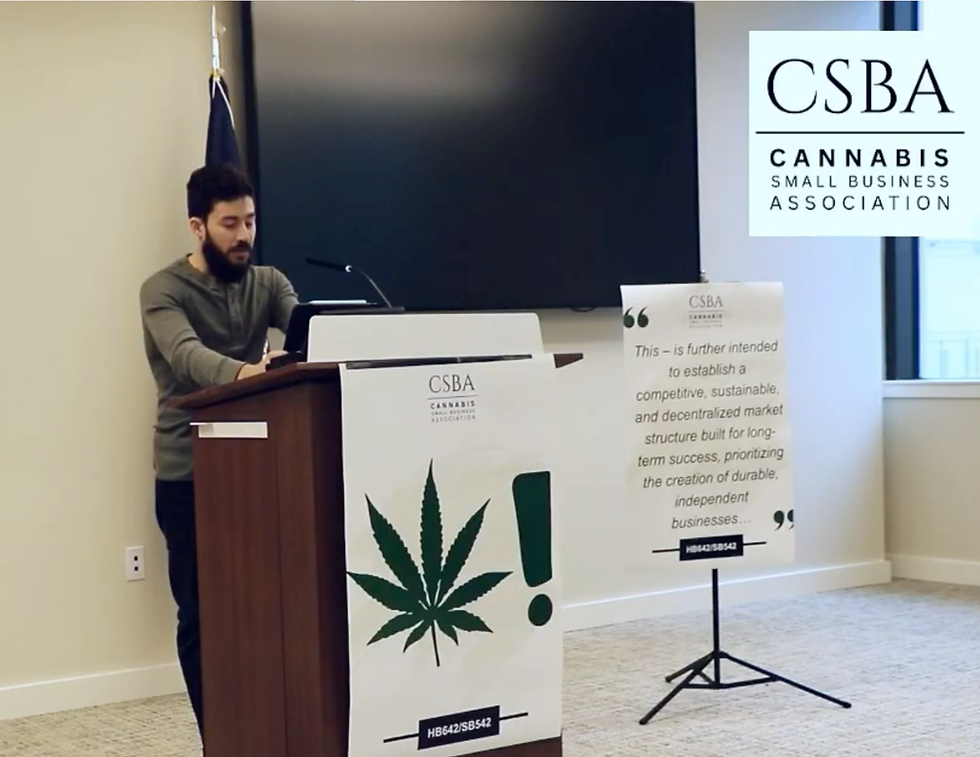
Max Jackson of Cannabis Wise Guys kicked off the presentations by dissecting the market structure and proposed timelines. He argued that the bills' aggressive rollout—potentially allowing sales as early as 2025—ignores the 18- to 36-month reality of cannabis cultivation cycles. "Existing medical operators would get a multi-year advantage through conversions, dominating the market before independents can even break ground," Jackson explained, citing New Jersey data where medical conversions have captured the lion's share of adult-use sales. This "structural head start," he warned, could irreparably harm Virginia's nascent independent cultivators, stifling competition and innovation.
Zoning Rules Threaten Urban Small Businesses

Barbara Biddle from District Hemp Botanicals addressed the zoning challenges, particularly the 1,000-foot setbacks from schools, parks, and other sensitive areas. These restrictions, she said, effectively block viable urban locations for small businesses and microbusinesses. "Real estate barriers are already steep for independents—add these setbacks, and you're excluding entrepreneurs who need multiple, accessible sites to thrive," Biddle stated. She advocated for zoning reforms that view cannabis retail as an opportunity for community revitalization rather than a blanket exclusion, ensuring small operators aren't priced out of high-potential markets.
Agricultural Realities Demand Adjusted Start Dates

Independent farmer Graham Redfern shared frontline insights into logistics, underscoring the upfront investments, buildouts, and licensing delays that make the bills' timelines unfeasible. "From seed to sale, we're looking at months of preparation that the legislation simply doesn't account for," Redfern noted. He called for legalization that aligns with agricultural cycles, allowing Virginia farmers to compete on a level playing field without being rushed into failure.

Michael Carter Jr. built on this by painting a stark picture of Virginia's farming crisis. With over 400 farms lost in the past year due to economic pressures, Carter positioned cannabis and hemp as potential lifelines. "Yet these bills favor corporate entities over our local growers," he said. "We need to push the start date to at least 2027 to give Virginia farmers a fair shot at equity and sustainability." His remarks resonated with CSBA's mission to protect small farms from further erosion.
ABC-CCA Merger: A Public Health Pitfall

Chelsea Higgs Wise from Marijuana Justice delivered a pointed critique of the proposed merger between the Virginia Alcoholic Beverage Control Authority (ABC) and the Cannabis Control Authority (CCA). Framing it as a threat to equity and safety, Wise argued that "regulating cannabis like alcohol is a proven public health failure." She highlighted ABC's revenue-first model, which has led to regulatory capture and a lack of focus on health interventions. "ABC's mission doesn't even mention public health— their reports ignore it entirely," Wise said, referencing JLARC findings that recommend an independent cannabis agency. She urged halting the merger to prioritize education, services, and day-one inclusion for marginalized communities, warning that the alternative could perpetuate inequities.
Q&A: Penalties, Enforcement, and Future Outlook

The session transitioned into a robust Q&A, where speakers addressed concerns about criminalization and enforcement. Wise emphasized shifting from law enforcement responses to public health interventions, such as better labeling, packaging, and consumer education under a standalone CCA. Discussions also touched on avoiding a "new prohibition era" through reduced punitive penalties and repealing smell-based stops.
Questions on large versus corporate farmers highlighted the need for the Virginia Department of Agriculture and Consumer Services (VDACS) to lead regulation, not law enforcement, to mitigate risks like hemp THC limits and crop destruction. Wise noted potential litigation from MSOs, drawing parallels to Ohio antitrust cases, and stressed that Virginia's approach could invite similar challenges if it doesn't safeguard small operators.
On optimal start dates, speakers converged on November 2027 or 2028 as realistic, balancing consumer demand with the need for quality and choice. "Consumers are impatient, but rushing leads to the 'Budweiser of weed'—we want room for artisan products from our local growers," one panelist remarked. Debates over license caps, including a proposed 350-store limit, raised alarms about market saturation and access for new entrants, especially when compared to Virginia's 30,000+ alcohol licenses and 405 ABC stores.
A Call to CSBA Members: Advocate for Change
As the conference wrapped up with thanks to patrons and participants, the message to CSBA members was clear: Virginia's cannabis future hinges on policies that empower small businesses and farmers, not entrench corporate monopolies. By supporting delayed timelines, zoning reforms, and an independent regulatory body, we can foster a market rich in consumer choice, quality products, and economic opportunity. CSBA encourages members to contact legislators, share this report, and join upcoming advocacy efforts to ensure our voices shape a just and prosperous industry.
For more details, visit CSBA's website or contact us at info@csbassociation.com. Together, we can turn the tide for Virginia's cannabis community.


Comments